top of page

SEVEN/FIFTY
The Centre for Constitutional Studies Blog
A hub for current constitutional dialogue and commentary in Canada and beyond
Recent Posts


You Can't Have it Both Ways: Why the Courts Must Recognize the Right of Self-Government as Included in Section 35 of the Constitution Act, 1982
Let us start at the beginning — what makes a right a right? Your rights are really only rights if they serve to protect activities that you want to engage in. If you want to say something controversial in public, the constitutional guarantee of freedom of expression allows you to do that, as it is your right to. If you were a hermit, though, and never saw anyone else who you could say something to, the fact that freedom of expression is a constitutional right would be irrelev

Ian Peach
17 hours ago3 min read


Time for a National Referendum to Approve Steps to Strengthen the Canadian Federation
Unaccountable Executive Federalism is Weakening National Unity As Canada adapts to the disorderly post-free trade world and an adversarial relationship with the US, we need to take steps now to build a stronger federal structure to ensure Canada’s long-term sovereignty and security. We need constitutional or quasi-constitutional changes to the senate or similar structure, to better manage intergovernmental relations in our highly decentralized federation and strong provi

Deborah Coyne
Sep 177 min read


The Constitutional Implications of Canada’s Current MAiD Policy and Possible Avenues for Reform: An Interview with Dr. Kerri Froc
In this expert interview, Claire Adam, a 2026 Centre for Constitutional Studies Summer Student, speaks with Dr. Kerri Froc (University of New Brunswick), who unpacks the constitutional implications and social effects of the current MAiD scheme in Canada, as well as possible avenues for MAiD law reform. Q. There is a general public awareness that the old blanket prohibition on Medical Assistance in Dying (“MAiD”) was struck down by the Supreme Court of Canada (“SCC”) in Carter
Claire Adam
Sep 917 min read


Evaluating Recent Changes to Canada's Bail Laws: An Interview with Dr. Nicole Myers
In this expert Q&A, 2026 CCS Summer Student Kiera Fischer talks to Professor Nicole Myers (Queen's University, Department of Sociology) about recent efforts at bail reform in Canada, including the recently enacted Bail and Sentencing Reform Act. Q. Bill C-14, the Bail and Sentencing Reform Act, has recently made some considerable changes to bail laws in Canada. Can you describe what key changes have been made? A. I would say that there are two components that we really want t

Kiera Fischer
Sep 211 min read


How Did We Get to a Referendum Question on Separation? Mapping the Legal Journey of the Citizen Initiative Petitions in Alberta
This article serves as Part I of an explainer on the legal developments surrounding the various Alberta separatism petitions that have dominated headlines in recent months. Part I covers the timeline of Mr. Sylvestre’s petitions, the Forever Canadian Petition, and the relevant amendments that have been made to the law governing citizen petitions in Alberta, the Citizen Initiative Act. Subsequently, Parts II and III will dissect Justice Leonard’s May 13, 2026, decision in Atha
Kiera Fischer
Aug 2713 min read


A Letter in the Law: Reconciling the Text and Purpose of Section 33
Introduction To date, the prevailing authority on the interpretation of section 33 is the Supreme Court of Canada (“SCC”)’s 1988 judgment in Ford v Quebec (Attorney General),[1] which determined that valid invocation of section 33 by a legislature establishes requirements of form only, with no further substantive limitations on how the clause can be used to override fundamental rights.[2] In anticipation of the SCC’s upcoming reconsideration of section 33 in the English Montr

Reid LeClair
Jul 288 min read


Proposed Referendum Question on Alberta Independence Found Unlawful in Chief Electoral Officer of Alberta v Sylvestre
It looks increasingly likely that Albertans will be voting on whether to separate from Canada this year. This vote would not only pose an existential challenge to the entire country, but has also been found to contravene certain constitutional rights by Justice Colin Feasby (Alberta Court of King’s Bench) in Chief Electoral Officer of Alberta v Sylvestre . [1] The effect of this ruling has been limited, however, by Alberta’s Justice Statutes Amendment Act, 2025 (“Bill 14”),

Anjali Choudhary
Apr 99 min read


“Matriating” the Constitution: A Historical Overview of Section 28 of the Charter in the Lead-Up to Bill 21’s Appeal Before the Supreme Court of Canada
Next week, the Supreme Court of Canada (“SCC”) will spend four days on a landmark hearing on the constitutionality of Quebec’s controversial Bill 21. [1] Enacted in 2019, Bill 21 — formally known as An Act respecting the laicity of the state [2] — seeks to enforce secularism in the province by targeting the wearing of religious symbols in the public sphere. The law requires certain civil servants — lawyers, police officers, and public school teachers among them — to remove r

Kira Davidson
Mar 1916 min read


Allegiance, Compulsion, and the Charter: Why Wirring v Law Society of Alberta Matters
On December 16, 2025, the Alberta Court of Appeal did something no Canadian appellate court has done before: it struck down a statutory oath of allegiance requirement for admission to the bar as unconstitutional. In Wirring v Law Society of Alberta , the Court held that Alberta’s requirement that aspiring lawyers swear an oath of allegiance to the Crown infringes freedom of religion under section 2(a) of the Charter of Rights and Freedoms (“ Charter ”) and cannot be justif
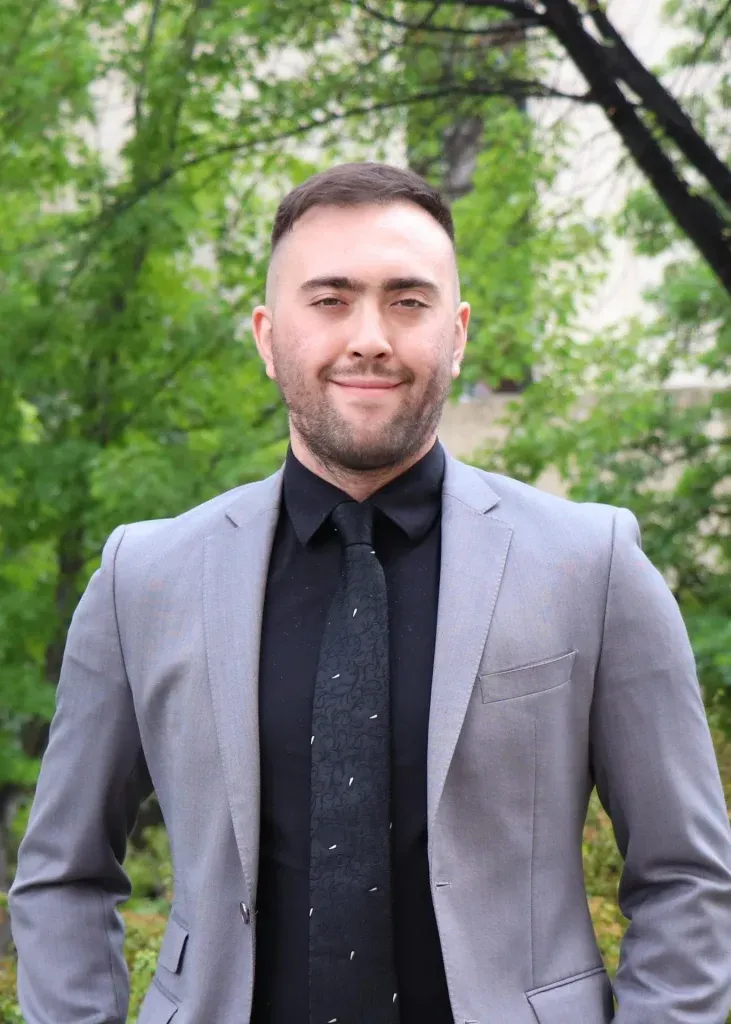
Daniel Lincoln
Mar 168 min read
A Provincial Role in Judicial Appointments: Turning a Reasonable Request into a Poison Pill?
Late last month Alberta Premier Danielle Smith sent Prime Minister Mark Carney a letter, made public in the first week of February, seeking a role for the Alberta government in the selection of federally-appointed judges. [1] This is a reasonable request. Indeed, my understanding is that it has generally been common practice for the federal Justice Minister to seek the opinion of their provincial counterpart from the province for which they would be appointing a judge (as we
Ian Peach
Feb 247 min read
Search


R v Hills and the Constitutionality of Mandatory Minimums
CCS summer student Anisa Hussain talks to Professor Colton Fehr (Thompson Rivers University, Faculty of Law) about R v Hills case.
ccsedu
Sep 6, 20238 min read
bottom of page